
Decision Support Systems
Decision systems in AI in disease diagnosis can provide healthcare professionals with recommendations and treatment options based on patient medical data.

Leveraging the power of Artificial intelligence software in disease diagnosis, assisting doctors in providing faster and more accurate medical analyses.
Xeven Solutions is a leading software company at the forefront of Artificial intelligence in disease diagnosis. Our cutting-edge technology harnesses the power of artificial intelligence to revolutionize the field of diagnostics. With our AI diagnose platform, healthcare professionals can experience enhanced accuracy and efficiency in disease diagnosis. By leveraging advanced algorithms and machine learning, our software analyzes vast amounts of patient data, enabling precise and timely identification of diseases. Our AI assisted diagnosis empowers doctors to make informed decisions, improving patient outcomes. At Xeven Solutions, we are committed to pushing the boundaries of performance diagnostics through the seamless integration of artificial intelligence. Join us in shaping the future of healthcare with our innovative solutions in artificial intelligence in disease diagnosis.
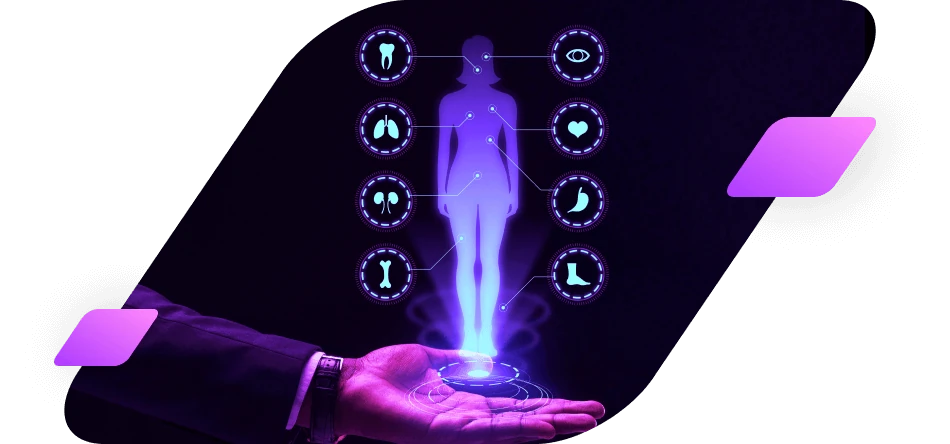

AI algorithms can analyze vast amounts of patient data, including medical records, lab results, and imaging scans, with incredible speed and accuracy.

AI-powered systems can process and interpret medical data much faster than humans. This speed can significantly reduce the time required for diagnosis.

AI diagnose software can automate repetitive tasks, such as data entry and analysis, freeing healthcare professionals' time to focus on patient care.

AI assisted diagnosis algorithms enable the development of personalized treatment plans tailored to individual patients, considering their medical history.

Providing recommendations, AI diagnostics algorithms can assist doctors in making well-informed decisions, leading to more effective and targeted interventions.

Artificial intelligence in disease diagnosis systems can refine their algorithms and capabilities, staying up-to-date with the latest medical research and advancements.
Decision systems in AI in disease diagnosis can provide healthcare professionals with recommendations and treatment options based on patient medical data.
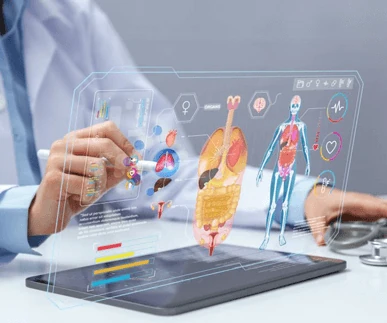
AI can analyze patient data, including medical records, lab results, and genetic information, to identify patterns and risk factors associated with various diseases.
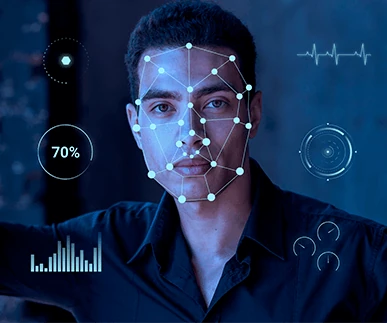
AI algorithms can analyze medical images, such as X-rays, MRIs, and CT scans, to assist radiologists in detecting abnormalities and making accurate diagnoses.
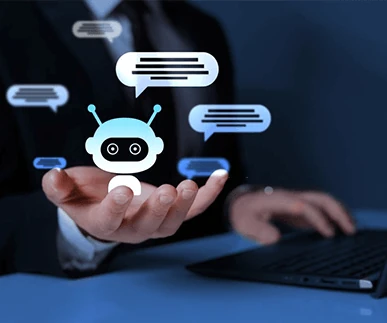
AI-powered virtual assistants can interact with patients, collect their symptoms, and provide initial assessments. It helps patients by providing basic medical advice.
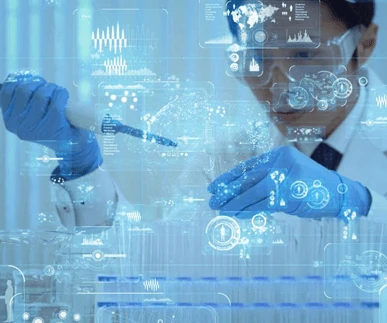
AI performance diagnostics algorithms can analyze vast amounts of biomedical data to identify potential drug candidates and predict their efficacy.
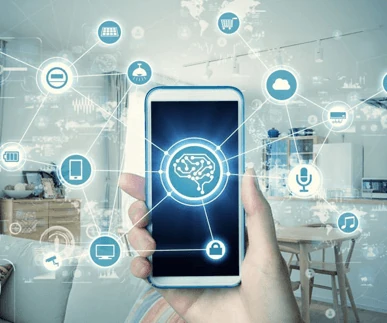
AI assisted diagnosis software can remotely monitor a patient's vital signs, such as heart rate, blood pressure, and glucose levels.
Decision systems in AI in disease diagnosis can provide healthcare professionals with recommendations and treatment options based on patient medical data.
AI can analyze patient data, including medical records, lab results, and genetic information, to identify patterns and risk factors associated with various diseases.
AI algorithms can analyze medical images, such as X-rays, MRIs, and CT scans, to assist radiologists in detecting abnormalities and making accurate diagnoses.
AI-powered virtual assistants can interact with patients, collect their symptoms, and provide initial assessments. It helps patients by providing basic medical advice.
AI performance diagnostics algorithms can analyze vast amounts of biomedical data to identify potential drug candidates and predict their efficacy.
AI assisted diagnosis software can remotely monitor a patient's vital signs, such as heart rate, blood pressure, and glucose levels.
Decision systems in AI in disease diagnosis can provide healthcare professionals with recommendations and treatment options based on patient medical data.
AI can analyze patient data, including medical records, lab results, and genetic information, to identify patterns and risk factors associated with various diseases.
AI algorithms can analyze medical images, such as X-rays, MRIs, and CT scans, to assist radiologists in detecting abnormalities and making accurate diagnoses.
AI-powered virtual assistants can interact with patients, collect their symptoms, and provide initial assessments. It helps patients by providing basic medical advice.
AI performance diagnostics algorithms can analyze vast amounts of biomedical data to identify potential drug candidates and predict their efficacy.
AI assisted diagnosis software can remotely monitor a patient's vital signs, such as heart rate, blood pressure, and glucose levels.
Decision systems in AI in disease diagnosis can provide healthcare professionals with recommendations and treatment options based on patient medical data.
AI can analyze patient data, including medical records, lab results, and genetic information, to identify patterns and risk factors associated with various diseases.
AI algorithms can analyze medical images, such as X-rays, MRIs, and CT scans, to assist radiologists in detecting abnormalities and making accurate diagnoses.
AI-powered virtual assistants can interact with patients, collect their symptoms, and provide initial assessments. It helps patients by providing basic medical advice.
AI performance diagnostics algorithms can analyze vast amounts of biomedical data to identify potential drug candidates and predict their efficacy.
AI assisted diagnosis software can remotely monitor a patient's vital signs, such as heart rate, blood pressure, and glucose levels.
Decision systems in AI in disease diagnosis can provide healthcare professionals with recommendations and treatment options based on patient medical data.
AI can analyze patient data, including medical records, lab results, and genetic information, to identify patterns and risk factors associated with various diseases.
AI algorithms can analyze medical images, such as X-rays, MRIs, and CT scans, to assist radiologists in detecting abnormalities and making accurate diagnoses.
AI-powered virtual assistants can interact with patients, collect their symptoms, and provide initial assessments. It helps patients by providing basic medical advice.
AI performance diagnostics algorithms can analyze vast amounts of biomedical data to identify potential drug candidates and predict their efficacy.
AI assisted diagnosis software can remotely monitor a patient's vital signs, such as heart rate, blood pressure, and glucose levels.
Decision systems in AI in disease diagnosis can provide healthcare professionals with recommendations and treatment options based on patient medical data.
AI can analyze patient data, including medical records, lab results, and genetic information, to identify patterns and risk factors associated with various diseases.
AI algorithms can analyze medical images, such as X-rays, MRIs, and CT scans, to assist radiologists in detecting abnormalities and making accurate diagnoses.
AI-powered virtual assistants can interact with patients, collect their symptoms, and provide initial assessments. It helps patients by providing basic medical advice.
AI performance diagnostics algorithms can analyze vast amounts of biomedical data to identify potential drug candidates and predict their efficacy.
AI assisted diagnosis software can remotely monitor a patient's vital signs, such as heart rate, blood pressure, and glucose levels.
Decision systems in AI in disease diagnosis can provide healthcare professionals with recommendations and treatment options based on patient medical data.
AI can analyze patient data, including medical records, lab results, and genetic information, to identify patterns and risk factors associated with various diseases.
AI algorithms can analyze medical images, such as X-rays, MRIs, and CT scans, to assist radiologists in detecting abnormalities and making accurate diagnoses.
AI-powered virtual assistants can interact with patients, collect their symptoms, and provide initial assessments. It helps patients by providing basic medical advice.
AI performance diagnostics algorithms can analyze vast amounts of biomedical data to identify potential drug candidates and predict their efficacy.
AI assisted diagnosis software can remotely monitor a patient's vital signs, such as heart rate, blood pressure, and glucose levels.
Decision systems in AI in disease diagnosis can provide healthcare professionals with recommendations and treatment options based on patient medical data.
AI can analyze patient data, including medical records, lab results, and genetic information, to identify patterns and risk factors associated with various diseases.
AI algorithms can analyze medical images, such as X-rays, MRIs, and CT scans, to assist radiologists in detecting abnormalities and making accurate diagnoses.
AI-powered virtual assistants can interact with patients, collect their symptoms, and provide initial assessments. It helps patients by providing basic medical advice.
AI performance diagnostics algorithms can analyze vast amounts of biomedical data to identify potential drug candidates and predict their efficacy.
AI assisted diagnosis software can remotely monitor a patient's vital signs, such as heart rate, blood pressure, and glucose levels.
Decision systems in AI in disease diagnosis can provide healthcare professionals with recommendations and treatment options based on patient medical data.
AI can analyze patient data, including medical records, lab results, and genetic information, to identify patterns and risk factors associated with various diseases.
AI algorithms can analyze medical images, such as X-rays, MRIs, and CT scans, to assist radiologists in detecting abnormalities and making accurate diagnoses.
AI-powered virtual assistants can interact with patients, collect their symptoms, and provide initial assessments. It helps patients by providing basic medical advice.
AI performance diagnostics algorithms can analyze vast amounts of biomedical data to identify potential drug candidates and predict their efficacy.
AI assisted diagnosis software can remotely monitor a patient's vital signs, such as heart rate, blood pressure, and glucose levels.
Our extensive experience in AI development and implementation gives us a proven track record of success and expertise to meet your business's AI needs.
Employing over 150 individuals, we offer a broad range of skills and knowledge to support your business's AI requirements, providing a comprehensive solution to meet your needs.
Our international footprint with offices in the USA, UK, and UAE allows us to offer AI solutions and support worldwide, making us an excellent choice for businesses with worldwide operations.
We prioritize our employees' growth and development, ensuring a dedicated and motivated team that is committed to delivering the best AI solutions for your business.

Explore machine learning applications to solve real-world problems such as disease diagnosis, fraud detection, environmental change detection, and more.
Read More
Synthetic audio generation is getting better with the rise of artificial intelligence. Learn how to detect AI voices with or without AI detection tools.
Read More
This article will explain 7 lucrative and innovative AI business ideas for entrepreneurs that can help them earn money.
Read More
Read our guide on generative AI for Shopify and WordPress to learn how generative AI is transforming e-commerce and CMS platforms, driving innovation and growth.
Read More
Explore complementary solutions and industries we serve with custom AI and software development.